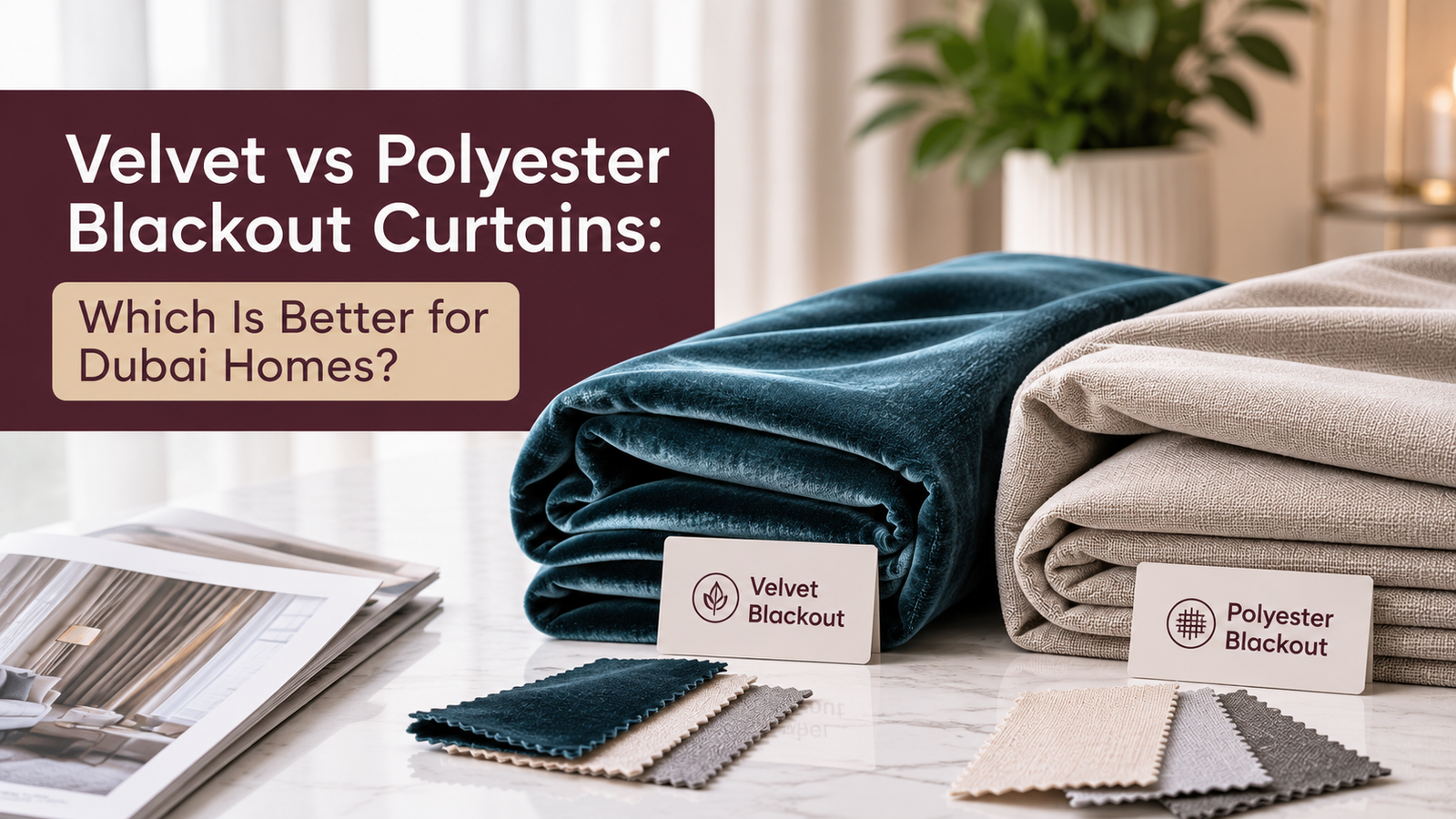
Standing in front of a fabric wall with dozens of swatches, most people in Dubai narrow it down to the same two contenders: velvet and polyester. Both block light well, but that’s about where the similarity ends. The right choice depends on your room, your budget, and how much heat your windows actually take on.
Here’s how the two really compare not in a showroom, but in a Dubai apartment or villa.
Quick Comparison
| Factor | Velvet | Polyester |
|---|---|---|
| Light blocking | Excellent, dense weave | Excellent, especially triple-weave |
| Heat insulation | Very good — thick pile traps heat well | Good, better with thermal lining |
| Price (approx.) | AED 1,000–1,800+ per panel | AED 300–700 per panel |
| Best for | Villas, formal living rooms, bedrooms | Apartments, kids’ rooms, budget-conscious homes |
| Maintenance | Needs gentler care, dry-clean often preferred | Machine washable, low maintenance |
| Drape | Heavy, luxurious fall | Lighter, crisper fall |
| Dust/allergen retention | Higher — pile fabric holds dust | Lower — smoother surface |
Velvet: The Premium, Heavier Choice
Velvet has a dense pile that does two things well: it blocks light almost completely, and it absorbs sound better than most other fabrics — useful in high-rise apartments along Sheikh Zayed Road or near Palm Jumeirah’s busier stretches.

Where it shines in Dubai homes:
- Villa living rooms and formal bedrooms — the weight and drape suit larger windows and higher ceilings, common in communities like Arabian Ranches or Jumeirah 1/2/3.
- West-facing rooms with harsh afternoon sun — the thick weave slows heat transfer noticeably compared to lighter fabrics.
- Anyone prioritizing look over practicality — velvet photographs well and reads as premium, which is why it’s popular in Palm Jumeirah villas and apartments.
The trade-offs:
- Heavier fabric means heavier curtain tracks — motorized systems handle this better than basic manual rods.
- Dust and pet hair cling to the pile more than smooth fabrics, so it needs more frequent vacuuming or professional cleaning.
- It’s the pricier option, generally starting around AED 1,000 and climbing well past AED 1,800 for wider, custom-cut panels.
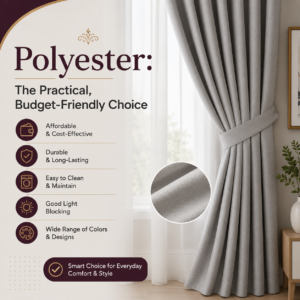
Polyester: The Practical, Budget-Friendly Choice
Polyester blackout curtains — especially triple-weave versions — have closed most of the performance gap with velvet in recent years. The fabric is engineered specifically for light blocking and heat resistance, without the upkeep.
Where it shines in Dubai homes:
- Apartments in JVC, Al Furjan, Discovery Gardens, and Motor City — where practicality and easy care matter more than formal styling.
- Kids’ rooms and nurseries — machine washable, resistant to spills, and easy to replace if needed.
- Rental properties — lower cost makes it easier to upgrade or swap without a big investment.
- Anyone running AC hard through Dubai summers — thermal-lined polyester options specifically target heat transfer through glass.
The trade-offs:
- Doesn’t have the same visual weight or drape as velvet — it can look flatter on very large windows.
- Standard (non-triple-weave) polyester blocks less light than a comparable velvet panel.
Which One Actually Suits Your Home?
A few honest rules of thumb, based on what tends to work across Dubai’s different property types:
- Glass-heavy towers (Downtown, Business Bay, DIFC): Either fabric works, but if you’re not adding motorized tracks, triple-weave polyester with thermal lining is the more practical pick for heat control.
- Waterfront apartments (Marina, JBR): Reflected light off the water is stronger than people expect. Triple-weave polyester or a lighter velvet blend both perform well here.
- Villa communities (Arabian Ranches, Dubai Hills, Mirdif): Bigger windows and higher ceilings favor velvet’s weight and drape, especially in formal living areas.
- Budget-conscious, family-heavy areas (JVC, Al Furjan): Polyester covers the vast majority of real-world needs without paying for performance you won’t use.
The Real Deciding Factor: Exposure, Not Just Taste
The fabric that looks best in a showroom isn’t always the one that performs best on your actual window. A shaded courtyard window in a villa doesn’t need the same fabric as a west-facing Marina tower catching full afternoon glare off the water. That’s why a measurement visit matters — it’s not just about size, it’s about seeing which direction your windows face and how much heat they’re actually dealing with.
What We Notice Once Curtains Are Actually Installed
Fabric decisions often change once people see both options hanging in their own room, not on a swatch card. A few patterns from repeat installs:
- Velvet looks better in photos than in daily use for smaller apartments. In compact bedrooms curtains, the fabric’s bulk can make a window feel smaller once it’s actually hanging, something a swatch never shows.
- Polyester buyers upgrade to thermal lining more than velvet buyers do. Velvet already handles heat reasonably well on its own, so the lining upsell matters most for lighter fabrics.
- Velvet complaints, when they happen, are almost always about dust — not light-blocking. The fabric blocks light exactly as expected; it’s the maintenance side people underestimate going in.
None of this makes one fabric objectively “better” — it just means the swatch-card decision and the lived-in decision aren’t always the same one.
Frequently Asked Questions
Is velvet or polyester better for blocking Dubai’s summer heat? Both perform well, but for different reasons. Velvet’s dense pile physically traps heat before it reaches the room, while triple-weave polyester with thermal lining reflects heat away from the glass. In a west-facing room with direct afternoon sun, thermal-lined polyester often edges ahead on pure heat control; in a room with indirect but constant glare, velvet’s weight tends to win.
Does velvet fade faster than polyester in direct sunlight? Generally yes. Velvet’s natural fibers (or fiber blends) are more prone to sun-fading over time than polyester, which is engineered to resist UV degradation. If your window gets several hours of direct sun daily, polyester will likely hold its color longer without a fading upsell.
Can I mix velvet and polyester in the same home? Absolutely, and it’s more common than people expect. A typical setup is velvet in the formal living room or master bedroom, with polyester in kids’ rooms, guest rooms, or a home office — matching the fabric to how each room is actually used rather than keeping everything uniform.
Is polyester “cheap-looking” compared to velvet? Not with modern triple-weave polyester. Cheaper, thinner polyester can look flat, but triple-weave and thermal-lined versions have enough body and texture to look intentional rather than budget. The visual gap between the two fabrics has narrowed a lot in the last few years.
Which fabric is easier to maintain in a Dubai apartment? Polyester, without much competition. It’s machine washable, resists staining, and doesn’t hold dust the way velvet’s pile does. Velvet usually needs professional or dry cleaning and more frequent vacuuming, which matters more in dustier areas or homes with pets.
Do both fabrics come in motorized (S-fold) options? Yes. Both velvet and polyester can be fitted to motorized S-fold tracks. The main consideration is weight — heavier velvet panels need a properly rated motor and track, which we account for at the measurement visit so the motor isn’t underpowered for the fabric.
Still Deciding? Bring Both to the Table
Most people don’t need to pick blind. Book a free measurement visit, bring both fabric samples into your actual room, and see how each looks against your light and your walls before committing. What works in one apartment doesn’t always work in the one next door — even in the same building.
Ready to compare fabrics in your own space?Book a free measurement visit and we’ll bring velvet and polyester samples straight to your window.